Why America should welcome China’s attempt to spy on RIMPAC

RIMPAC 2014


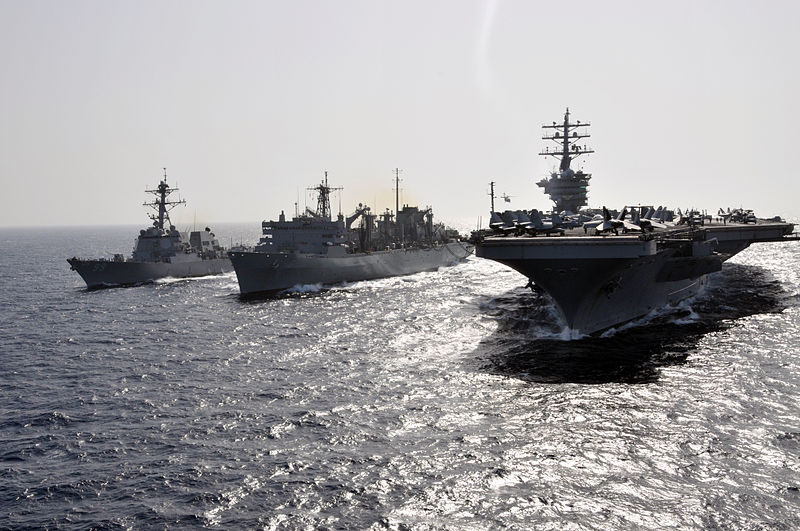
It has recently been reported that China has sent a surveillance vessel to observe the RIMPAC exercise in which Beijing is participating for the first time.

Little open source information is available about the Dongdiao-class (Type 815) intelligence collection/missile range instrumentation ship, but Jane’s has viewed material that suggests the class possesses “high-technology radio signal gathering and processing equipment”.  As part of its formal presence, the PLA-N has sent a missile destroyer, a missile frigate, a supply ship and the Peace Ark hospital ship.

While some have called on China to be banned from participating in future RIMPAC exercises, Washington should welcome Beijing’s clumsy move.  By acknowledging China’s right to conduct electronic surveillance from within Hawaii’s exclusive economic zone and by not attempting to impede it, Washington is supporting a global norm that China has sought to dispute, most notably illustrated by the 2009 incident in which Chinese vessels harassed the USNS Impeccable in international waters.

By not impeding the PLA-N’s surveillance ship, America is making it more difficult for Beijing to obstruct vessels in waters off the Chinese coast.  This will not only strengthen the U.S. position,  but will benefit regional states in Asia which have experienced harassment by Chinese vessels.

Japan and Collective Self-Defence

Japan’s cabinet has approved a reinterpretation of its constitutional restrictions on its use of armed force.  The new interpretation has cleared the way – pending parliamentary ratification – for collective self-defence, the use of force to defend not only Japan but its allies.

It’s important to note, however, that some significant caveats will remain attached to Japan’s interpretation of collective defence.  Firstly, any attack on an allied country must clearly endanger Japan’s survival or severely impinge upon Japanese citizens’ lives, liberty and pursuit of happiness.  Secondly, the use of force must be the only way to repel the attack on Japan’s ally and protect Japanese citizens.  Thirdly, any use of force must be limited to the minimum required level.

While such caveats certainly offer room for manoeuvre, this reform is not evidence of the Japanese remilitarisation that Beijing and Seoul often identify in the most routine of Japanese military decisions.

Nevertheless, the move has not been without controversy.  One man set himself alight in Tokyo in protest while others have protested more soberly.  Abroad, China has, predictably, expressed outrage while South Korea has also expressed concern.

This reform, however, is a fillip for the U.S. which has long encouraged Japan to play a greater security role in its region.  Countries such as Australia also stand to benefit from a more normal Japanese defence posture.  Canberra is interested in acquiring Japanese submarine technology, or even completed submarines.

It’s difficult to emphasise how symbolically important Tokyo’s decision is.  In the wake of the Second World War, Japan adopted the Yoshida Doctrine, named after its formidable postwar Premier, Yoshida Shigeru.  This approach, which has remained hugely influential, demands that Japan focus on economic development while maintaining the relatively lightweight Japan Self-Defence Forces (JSDF).  To ensure its security, Japan has accommodated a substantial U.S. military presence.

While some in Washington accused Tokyo of free-riding throughout the Cold War, Japan’s grand strategy was undoubtedly successful.  In the early postwar years it was feared by it neighbours, despite its impoverished circumstances.  The doctrine guided Japan through a difficult period, enriching it and nurturing its status as a solid global citizen.  Why, then, has Tokyo decided to modify its stance?

The primary reason is China.  Beijing’s impressive military modernisation, combined with its increasing willingness to assert its expansive maritime claims, has focused minds in Tokyo.  By permitting the JSDF to come to the aid of its allies, even in the absence of a direct attack on Japan, Tokyo has changed Beijing’s strategic calculus and signalled its intent to balance against China.

Tokyo’s decision also hints at its doubts about Washington’s ability to maintain its primacy in Asia.  Though the U.S. will remain the strongest power in Asia for some time, Beijing is closing the gap at an impressive rate.  China will probably never be able to establish Chinese primacy in Asia, but its ability to contest American primacy is growing.  By freeing the JSDF to come to the aid of its allies, Tokyo is supporting the U.S. primacy that has guaranteed Japanese security for decades.

Domestic politics has also played a role in this decision.  Prime Minister Shinzo Abe has driven this reinterpretation which reflects his own nationalist views.  It is easily reconciled with his desire for Japan to be a normal nation, proud of its history and able to unashamedly wield all instruments of statecraft commensurate with its economic power.

While this reinterpretation won’t change Asia’s strategic environment in the short-term, it is a significant event illustrating the danger of security dilemmas in Asia.  As Beijing has increased its military strength, inculcated anti-Japanese nationalism as a way to legitimise the Communist Party’s continued rule, and sought to expand its maritime borders in an attempt to increase its internal and external security, it has made Japan feel less secure.

This has led to Tokyo’s decision to reinterpret its constitutional restrictions on the use of force, a decision which is likely to make Beijing feel less secure and seek to increase its efforts to maximise its security.  Such a course of action will only make Japan feel even less secure, causing it to seek to increase its security, and so on.  It’s a dangerous dynamic and is likely to lead to a less stable Asia.

It’s important to note that war is not inevitable, or even particularly likely, at least in the immediate future.  The problem is that when nations begin to view their relationship in zero-sum terms, it’s difficult to step back and seek mutually beneficial compromises.  Nobody wants to have their restraint misinterpreted as weakness.

Ideally, all parties would acknowledge the concerns of others and seek to ameliorate them.  Beijing (and Seoul) should acknowledge that since 1945 Japan has been a model international citizen, instrumental in their development.  They should admit that Japan is not about to go on a rampage across Asia and has a right to provide both for its own security and the security of its allies.  Beijing should also recognise that its rapid military modernisation, opaque intentions and increasing assertiveness lead its neighbours to fear the worst about its long-term trajectory.

Tokyo, meanwhile, ought to acknowledge the impact that visits by its senior leaders to the Yasukuni Shrine have on public opinion in China and South Korea and refrain from attending.  It should also cease to equivocate on its wartime atrocities, particularly its use of Korean ‘comfort women’.

Unfortunately, as Asia tranforms from a region characterised by U.S. primacy to one in which balancing behaviour is increasingly open, recognising the legitimate grievances and rights of other parties seems to be becoming ever more difficult.
Preferences and Vital Interests

Shen Dingli’s recent Foreign Policy article makes a common criticism against recent U.S. policy toward Syria and Crimea.

He writes that,

 “…the record of Obama’s administration, and that of his predecessor’s, is of security assurances backed up lately only by inaction.  The United States has failed to stop Bashar al-Assad in Syria. It failed to stand up to Russia’s adventurism in the formerly Georgian territories of South Ossetia and Abkhazia in 2008, or in Crimea in March of this year.  Granted, none of these places are treaty allies of the United States.  But if the United States won’t face Russia in Europe, will it really challenge China in the East and South China seas?”

This echoes arguments made by other critics of the Obama Administration.  If the U.S. doesn’t stand up to Syria and Russia, they ask, how can it hope to deter China?

Such critics fear that if Washington’s Asian allies believe it doesn’t possess the will to enforce its preferences in the Middle East and Eastern Europe, they will question America’s willingness to defend them and seek to either bandwagon with Beijing or make greater provisions for their own defence, further destabilising the Asia-Pacific region.

Such criticism, however, stems from a failure to appreciate that judicious strategy distinguishes between preferences and vital interests.

Washington, of course, would prefer a secular liberal democracy to emerge in Syria.  It would also prefer a liberal democratic Ukraine free from Moscow’s malign influence.  Neither of these outcomes, however, can be easily achieved, if at all.  More to the point, the U.S. does not have a vital interest – defined as those interests which affect one’s security and that a state will use force to defend – in the outcome of either conflict.

First, Syria.  Chastened by its misadventures in Afghanistan and Iraq, Washington is not keen to get drawn into another Middle Eastern conflict.  Getting bogged down in another sectarian conflict in the Arab world would do little to promote U.S. security and would devour resources better devoted to supporting the Washington’s pivot to Asia.

As for Crimea, Washington has offered it no security assurances and is not treaty-bound to defend it.  Using force to do so would run the risk of a clash between U.S. and Russian forces.  The defence of Crimea or Ukraine, a weak, impoverished state on the periphery of Europe, is not worth risking a clash with a nuclear-armed Russia that has a greater stake in the outcome than Washington.

For those who argue that allowing Moscow to dissect Ukraine will encourage Russian revanchism, emboldening it to seek to regain territory it lost when the Soviet Union collapsed, a little perspective is required.

Its latest actions have weakened, not strengthened Russia.  It has estranged itself from Europe and its neighbours will now be more alert to any actions that suggest Moscow is looking to redraw its borders.  Should it seek to embark on such a course, it will likely result in a balancing coalition forming against it.

Should a European balancing coalition form against it, Russia would find itself in a weak strategic position.  Europe possesses a population five times greater than Russia and enjoys a GDP eight times larger than its eastern neighbour.  The U.S. could certainly act as an offshore balancer, but it need not man the front lines.  Contemporary Russia is not the Soviet Union; Washington should expect its European allies to do the heavy-lifting.

What, then, does this mean for Asia?  I believe that Asian leaders recognise these realities and privately applaud Washington’s decision to remain relatively aloof from the conflicts in Syria and Ukraine.  After all, it isn’t in their interests for Washington to dilute its strength by taking on new security commitments in the Middle East and Europe and it certainly isn’t in their interests for the U.S. to get bogged down in conflicts in these regions.

In conclusion, it is telling that only one Asian power would identify a benefit in U.S. involvement in Syria and Ukraine.  It’s the same power that benefited from Washington’s strategic distraction in the War on Terror and the ill-judged wars it fostered.  Beijing would be only too happy to see Washington’s strategic attention focused on Syria and Russia.  By declining to get involved in conflicts of marginal importance to its security, America is better able to marshal its resources for the purpose that will shape its security in the 21st century, balancing China’s rise.


The Beginning of the End for Surface Combatants?

The Zumwalt Class

The Zumwalt Class


Foreign Policy has recently posted a story about the U.S. Navy’s new Zumwalt class guided missile destroyer.  The USN currently plans to construct three vessels of this class, at a cost of $7 billion per unit.  This is a huge sum of money, particularly as some naval architects have questioned its ability to remain afloat if struck from behind by a powerful wave.

While it seems difficult to believe that the USN would build a ship with such an obvious and potentially disastrous design flaw, one other comment in the article caught my eye.

The article highlights the phenomenal power generation capabilities of the Zumwalt class, noting that it may serve as a test platform for Boeing’s Free Electron Laser Weapon system.  That’s a laser gun to a layman.  In addition, it may one day sport a rail gun.

While no one is suggesting that these weapons will be mass produced and fitted on USN ships in the short to medium term – the example of ballistic missile defence illustrates the difficulties of bringing complex military technologies to fruition – should these weapons become part of the USN’s standard inventory, it would raise questions about the long-term future of major surface combatants.

Surface ships are already extremely vulnerable military platforms.  They are hugely expensive, increasingly easy to locate, move at relatively slow speeds and can be sunk by comparatively cheap weaponry such as anti ship missiles or mines.  In response, as illustrated by the Zumwalt, naval architects are turning to stealthy designs as a way to increase the survivability of surface vessels.  Should lasers or rail guns become de rigeur, however, it is difficult to imagine how surface vessels could effectively defend against them upon being located.

Perhaps the Zumwalt represents the final generation of major surface combatants.  Should Washington field such weapons, it seems reasonable to expect that they will soon be adopted by other advanced navies.  At this point, continuing to design and deploy surface combatants would appear to be an ineffective use of resources.  Submarine forces would be the obvious beneficiary as their ability to avoid detection would be even more attractive to naval planners.


An increased U.S. presence in the Philippines is on the cards

A proposed deal with the Philippes may see the U.S. Navy operating ships from that country

The Washington Post has reported that U.S. and Filipino officials are in the early stages of negotiating a deal that would see an expansion of Washington’s military presence in the Philippines.

Though the U.S. has stationed a small number of special forces troops in the country to assist Manila’s efforts to combat Islamist rebels, this deal, if successfully concluded, could allow the U.S. Navy to operate ships from the Philippines and rotate troops through bases there in addition to staging joint exercises.  Washington used to operate from a large base in the Philippines’ Subic Bay but left in 1992 when Manila decided not to renew the basing agreement.

This proposed new arrangement reflects increasing Filipino concern regarding assertive Chinese behavior in the South China Sea (which Manila has taken to naming the West Philippine Sea in an effort to bolster its own territorial claims).  It would also dovetail with the Obama administration’s pivot toward the Asia Pacific which has seen, for example, moves to station Littoral Combat Ships in Singapore and a deal with Australia increasing military co-operation between the U.S. military and Australian Defence Force.

A deal would serve U.S. efforts to disperse its forces in the Asia Pacific theatre, making them less vulnerable to attack in the early stages of any conflict with China.  An increased U.S. Navy presence in South East Asia would be key to any strategy of choking Chinese supply routes through the South China Sea and Straits of Malacca.

If these early negotiations are successful, further meetings will be held in March.  As such an arrangement would be in the stated interests of both states, it seems likely that some kind of agreement will be reached.

What explains Myanmar’s volte face?

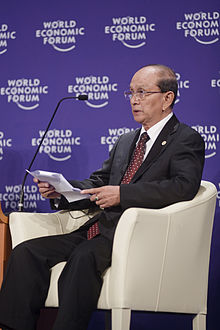
Myanmar President Thein Sein

While the Arab Spring has caused more ink to be spilled in attempts to explain why supposedly stable regimes were in reality brittle and vulnerable, another authoritarian state has begun to tentatively open up to the outside world. Much to the surprise of analysts who thought that the 2010 Myanmar elections would prove to be a sham that merely airbrushed the junta’s continued rule, recent events have suggested that the regime may be serious about liberalising.

Under the Presidency of Thein Sein, a former military officer, the new ‘civilian’ government, though it is composed of former senior military officers, has passed a new law loosening the ban on protests, though this has yet to be tested. Would-be protestors are required to apply for permission at least five days in advance.

Meanwhile, in an apparent attempt to address Myanmar’s ethnic divisions, the government has been reported to have called a ceasefire with the Shan State Army South, an armed ethnic rebel group. Aung San Suu Kyi, the country’s iconic pro-democracy activist, has also been released from house arrest and it seems that she will be permitted to return to politics.

Finally, the most obvious sign that the regime in Naypyitaw is liberalising somewhat is US Secretary of State Clinton’s recent visit. Allowing such a prominent figure to visit stands in marked contrast to Myanmar’s rejection of American aid in the wake of Hurrican Nargis.

The source of such a surprising turnaround is unclear. Some analysts have suggested that a rapprochement with the West could be motivated by a desire to avoid becoming too dependent upon China. However, while Naypyitaw has relied upon Beijing for arms and investment, particularly in the resource sector, it is also true that Thailand and India have proved to be more lucrative export markets. Myanmar is not the Chinese vassal state it is often portrayed to be.

Others, meanwhile, have suggested that some in the regime may have been repelled by the scale of the violence employed against protesting Buddhist monks in 2007. The military officers who formed the junta and who are now comfortably ensconced in the current civilian government have not, however, done anything in the past to suggest that they are squeamish about using force to perpetuate their rule, so this seems an unlikely motivation.

It seems more likely that events in the Middle East during the Arab Spring have concentrated the minds of those at the head of government. It seems plausible that they hope to tread a fine line between liberalising enough to give the average citizen a stake in their society and losing control, a path that Beijing is also attempting to stick to.

They may also hope to copy Pyongyang’s playbook: as a point of convergence between the great powers in the region, Naypyitaw may hope to play off the Chinese, Indians and, to a lesser extent, the Americans, against each other to its own advantage.

In short, the reasons behind Myanmar’s surprising direction are unclear. Thein Sein may prove to be Myanmar’s Gorbachev, though it should be noted that Gorbachev had no desire to break up the USSR, he simply wishes to modernise it. It seems safe to assume that those in government wish to preserve their leadership and that this desire will influence future decision-making.

A Declicate Balancing Act

We stand, in the words of Coral Bell, at the end of the Vasco da Gama era, having witnessed the apogee of Western domination over the international system.  For the first time in the modern era, Asia is taking its place alongside North America and Europe as a major centre of wealth, power and political weight.

A key driver of this re-emergence is the rise of China which has led scholars to consider the consequences for Asia’s strategic order.  Power is shifting East, goes the argument; power relativities are in flux. America, for so long the greatest power in Asia, will find its primacy to be increasingly unsustainable.

Inspired by the 19th century Concert of Europe, some commentators, seeking to mitigate the kind of conflict that has historically haunted power transitions, have suggested that Washington should surrender its primacy and instead embrace a system that would see it wield power in concert with the other great powers of Asia.  By sharing power with China, they argue, America could allow Beijing to maximise its power peacefully.

It seems obvious, however, that instead of the emergence of a concert of power, what is actually developing is an old-fashioned balance of power.

A balance of power creates order through the competition of major powers as each strives to improve its own position and prevent another from dominating. This balance restrains states’ behaviour as they realise that threats to the equilibrium will be met with balancing behaviour from other powers.  Such a balance seems to be emerging.

Firstly, at the recent APEC meeting, Washington signalled its determination to develop a Trans-Pacific Partnership, a free-trade area that could eclipse the European market.  While the U.S. is keen to avoid the perception that it is marginalising Beijing, it has also made it clear that Chinese participation would depend upon further economic reforms of a nature unappealing to the leaders ensconced in Zhongnanhai.

This renewed focus on economic ties with Asia reflects Washington’s concern that the Asia Pacific is become more Asian to the detriment of U.S. interests.  With most countries in the region enjoying stronger trade relations with China than the U.S., Washington is concerned that some of its allies and partners may find themselves aligning with Beijing in the future.

Secondly, Obama’s visit to Australia can also be seen in this light.  It is a response to Chinese military modernisation and the resulting vulnerability of U.S.bases in Okinawa and Guam.  It is also a way of strengthening ties with a key U.S. regional ally, one in which some voices have called upon Canberra to distance itself from the U.S. as China rises.

Furthermore, as China’s rise is perceived to threaten US primacy, other countries are already engaged in external and internal balancing. Japan, for example, is strengthening its alliance with Washington, while Australia’s 2009 Defence White Paper called for an expansion of Australia’s naval capabilities.  Seoul, meanwhile, is following a similar path of naval modernisation.

China has also been active, notably as a founding member of the Shanghai Co-operation Organisation, but has also focused on cultivating ties with Laos and competing with India for influence in Myanmar.

New Delhi itself is emerging as a key player, being courted by Washington as a potential balancer of China.  New Delhi, however, reflecting its desire to maintain strategic independence, is charting its own path, competing for influence in Myanmar and developing ties with Vietnam, a move that is welcome in Hanoi given its own concerns about China.  Moscow, though it has adopted a relatively passive posture, continues to be a major armaments and energy supplier to the region while its own conventional and nuclear arsenal bestows significant weight.  In short balancing is endemic in the region.

Finally, Australian Prime Minister Julia Gillard’s new-found determination to sell uranium to New Delhi is further evidence that a balance of power is being constructed.  Canberra’s refusal to sell uranium to India has been a significant source of tension in the relationship between the two countries.  Removing this obstacle to closer ties is a move that will allow a closer security relationship, such as that outlined in the AUSMIN 2011 Communique, to develop.

A balance of power model is not without its disadvantages.  Alliances would be temporary attempts to preserve the balance.  This raises the risk of miscalculation.  As Friedberg notes, “balance-of-power politics are seldom pretty, and they can be dangerous.”  World War One provides ample evidence of this.  Nevertheless, with skillful diplomacy and trust building measures, a balance of power would be able to mitigate competition and prevent it from heading inexorably towards strategic instability.  As US primacy fades, this may be the best Asia can hope for.

US to Upgrade Taiwan’s existing F-16 Fleet

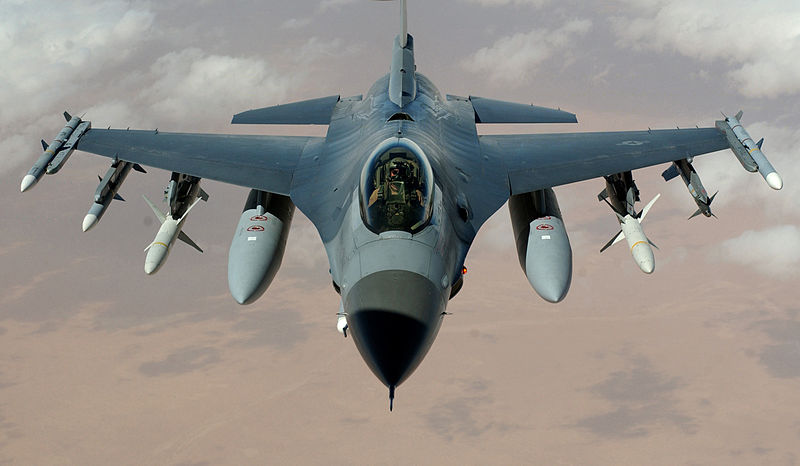
The Obama Administration has decided to upgrade Taiwan's existing F-16 fleet

The Obama Administration has decided not to sell Taiwan the latest variant of the F-16.  Instead of being permitted to purchase the latest F-16C/D variant, Taiwan will have to be satisfied with upgrades to its current, and ageing, F-16A/B fleet.

This decision seems likely to have been prompted by a number of factors.  Firstly, and most obviously, it seems probable that decision-makers took into account China’s objections to further arms sales to what Beijing considers a rogue province.  With the US keen to build ties with China, it will have been anxious to avoid a repeat of China’s reaction to Washington’s decision to sell Apache gunships to Taipei in 2010.  Beijing cut military-to-military ties with Washington in response.

Given recent scandals concerning Chinese espionage in Taiwan, It is also likely that the White House is concerned about the possibility of Beijing gaining access to information about the latest F-16 model.  The US refusal to consider selling its latest F-35 fighter is also indicative of this concern.

The decision to upgrade Taipei’s existing F-16 fleet was probably the most palatable option for the US.  Some analysts, for example, have argued that with upgrades to the F-16A/Bs, the aircraft may be almost equivalent to the latest variant, so Taiwan gets an improved aircraft, Beijing will object less vigourously than it would to the sale of new aircraft while Washington signals its continued support for Taiwan.

There has, however, been some criticism of the decision.  Some members of Congress, such as John Cornyn (R-Tex) have objected to mere upgrades and signaled their desire to force the Administration to sell the latest variant, highlighting the importance they attach to the support of Taipei in addition to the economic benefits to the US.  Lockheed Martin, hardly, it must be admitted, a disinterested observer, estimate that sale of the latest variant could generate as much as $8.7 billion and create up to 23, 000 jobs.  It has also been claimed that without the sale of the C/D model the F-16 production line may prove to be unsustainable.

Others, looking at the wider picture, have portrayed the decision as a capitulation to Chinese pressure which will fail to reassure US allies in the Asia Pacific of Washington’s continued commitment to their security.  Despite the best efforts of Secretary of State Clinton to assert that the US is back in Asia to stay, doubts persist among Asian allies about American staying power in the region.  Witness efforts by countries as diverse as Australia, Japan, the Philippines, South Korea and even Vietnam to encourage a renewed and increased American presence in the region.  Should the US be seen to fail to support Taiwan, it may result in regional capitals drawing uncomfortable conclusions regarding Washington’s commitment to their own security.

In addition, while this upgrade will improve Taiwan’s existing F-16 fleet, it will do nothing to replace its Mirage and obsolescent F-5 aircraft, meaning that the lethality of Taiwan’s air assets will continue to deteriorate.  This stands in marked contrast to the Chinese trend of continued and rapid modernization of its air and ballistic missile forces, many of which are deployed within easy reach of Taiwan.

In conclusion, then, this decision seems to be an effort to satisfy everyone, but which satisfied no one.  US support for its allies will be called into question, Beijing will still object to the upgrades, and Taiwan does not get a new fighter with which to replace ageing aircraft and balance against China’s military build-up.


AUSMIN 2011 Analysis

AUSMIN 2011 - 60th Anniversary of the ANZUS Alliance


The 2011 Ausmin meeting has recently concluded in San Francisco, marking the 60th anniversary of the ANZUS Treaty, signed in the same city.  Details regarding basing rights are still being negotiated so the nature and extent of any future US deployment is uncertain, but it seems apparent that the US military will increase its footprint in Australia.

While the Australian side was keen to portray greater US access to Australian facilities as a continuation of the current situation, highlighting that US forces have enjoyed access for decades and that the strengthening of the relationship should pose no difficulties for China or any other Asia Pacific nation, US representatives were more forthright.  Leon Panetta, the US Defence Secretary, stated that a strengthened relationship would send a clear signal in the Asia Pacific region to “those who would threaten us”.

It goes without saying that this is directed at China.  The US is keen to spread its forces more widely across the region to make it harder for China to hit them in the opening stages of any conflict and reassure its allies of its continuing commitment and ability to defend them.  To this end, the US is taking steps such as upgrading its base on Guam, stationing littoral combat ships in Singapore, and, potentially, increasing its forces on the Australian mainland.

Nevertheless, the 2011 communiqué remains balanced, calling for partnership with China, emphasising common interests and calling for military to military communication in order to prevent misunderstanding. Despite this stated desire to build bridges with China, the communiqué makes some pointed remarks concerning the South China Sea, a region in which Chinese assertiveness has raised concerns among other claimants, particularly Vietnam and the Philippines.  Asserting both the US’ and Australia’s national interest in freedom of navigation through the South China Sea, they oppose any attempt by one party to coerce or force another to accept its claims.  ‘Oppose’ is a particularly strong word, certainly more forthright than another word that might have been used in its place, such as condemn or reject, and it seems unlikely that it was chosen lightly.

The communiqué also mentions other countries.  It outlines support for increased training and interoperability between US, Australian, South Korean and Japanese forces to combat the threat posed to all by North Korea.  India, too, is highlighted as a potential partner.  The communiqué calls upon the US, Australia and India to identify areas in which they can co-operate such as maritime security, disaster relief and regional architecture.  India’s reaction to this call will be interesting.  It has its own concerns regarding Chinese intentions in the Indian Ocean, but, despite the best efforts of the US, has been reluctant to align itself with the West, preferring to preserve what it calls its strategic independence.  In addition, Australia’s refusal to sell uranium to India is an enduring obstruction to improved co-operation between Canberra and New Delhi.

The meetings also considered appropriate responses to future online attacks, of which China is believed to be a major source. It has been agreed that a future cyber warfare attack will activate the ANZUS Treaty, reflecting previous US suggestions that an online attack may result in a very real-world military retaliation.

In conclusion, then, the outcome of the 2011 Ausmin meeting has been a continuation of current trends.  The US is keen to distribute its forces more widely across the Asia Pacific region and to reassure its allies of its continuing commitment to the region, while Australia is keen to encourage a strengthened US presence and commitment to the region as a hedge against China’s rise.  While the exact nature of the US military’s future presence in Australia has yet to be agreed, it seems likely that it will represent a strengthened American commitment to the Asia Pacific.

Tensions Rise between the Philippines and China in the South China Sea: What’s in a Name?

Map of the Spratly Islands illustrating territorial claims


It seems that tensions are continuing to rise in the South China Sea.  Increasing Chinese assertiveness in the region has prompted complaints from Vietnam and the Philippines.  Vietnam has recently announced that it will carry out a live fire naval exercise in the region, a move widely seen as a response to China’s increasingly assertive posture, while there is a move in the Philippines to re-name the South China Sea.

A Filipino lawmaker, Walden Bello, has filed House Resolution 1350 calling upon the Filipino Congress to investigate the possibility of changing the name of the South China Sea to the Western Philippine Sea in an attempt to bolster Manila’s territorial claims in the region.  Such passions have been aroused by a number of clashes which have seen Chinese naval vessels harass Filipino ships around the disputed Spratly Islands.  In one of the most serious incidents, a Chinese naval vessel fire shots at Filipino fishing boats near the Jackson (Quirino) Atoll.

In addition, Manila has also claimed that China has constructed a military post near the Amy Douglas Bank, an act which could constitute a breach of the 2002 Declaration of the Code of Conduct of Parties in the South China Sea (DOC).  The DOC is a non-binding agreement between China and ASEAN which calls for restraint and the avoidance of occupation of uninhabited land.  Manila argues that this latter provision in particular has been “aggressively violated” by China.

China, for its part, argues that its sovereignty has been breached by Filipino vessels, though it is generally agreed that the clashes have taken place in waters within the Phillipines’ 200 kilometre Exclusive Economic Zone.

The problem is, of course, is how to determine ownership.  The United Nations Convention on the Law of the Sea (UNCLOS) gives a country sovereignty over seas up to 12 nautical miles (22.2 km/13.8 miles) from its coast, including of islands.  In addition, there is also a recognised 200 nautical mile Exclusive Economic Zone (EEZ).  This grants jurisdiction over natural resources found in the region, the right to conduct scientific research and to building structures. Recent incidents have been inside the EEZs of Vietnam and the Philippines.

China, however, argues that its historical sovereignty can be traced back to the 7th century and supersedes any contemporary claims to the sea, but says it is ready to cooperate with others on joint exploration.

In light of such disagreements, Manila has tried to internationalise the situation.  It has stated it intent to file an official protest over Chinese actions at the U.N. and has recently suggested that the Mutual Defence Treaty it signed with the U.S. in 1951 would be activated should any dispute with China escalate.

The U.S., however, seems less certain of this.  Its embassy in Manila stated that the “US does not take sides in regional territorial disputes”.  It outlined Washington’s concerns about recent incidents in the South China Sea and acknowledged that it shares a number of interests with the international community in the region, but refrained from mentioning the Philippines specifically, nor did it note the defence ties it shares with Manila.

This hesitation on the part of Washington has not, however, dissuaded Manila from pursuing its claims.  The Filipino military has confirmed that it refers to the South China Sea as the Western Philippine Sea, though Armed Forces spokesman Commodore Miguel Jose Rodriguez was also keen to add that other nations in the region also have their own names for the disputed waters.  Not to be outdone, the Filipino weather Bureau, Pagasa (the Philippine Atmospheric, Geophysical and Astronomical Services Administration) has announced that it, too, will henceforth refer to the region as the Western Philippine Sea.

It remains to be seen how China, and indeed other states which hold territorial claims in the South China Sea, will react to this latest move by Manila.