
Lee Hsien Loong, Prime Minister of Singapore
On Friday 12 October, I had the privilege of attending an Asia Society lunch hosted by Lee Hsien Loong, Prime Minister of Singapore, at the Shangri La Hotel in Sydney. (Sometimes I really suffer for this blog)
In his remarks, the Prime Minister hailed the warm and increasing ties between his country and Australia. He also highlighted the positive aspects of globalisation while noting that it has impacted negatively on job security and created increasing income gaps.
Nevertheless, the Premier was generally positive about Asia’s trajectory which is inextricably linked to China’s continued re-emergence on the world stage. While the Premier stated that he believes a successful China will be positive for both the region and the world, he did acknowledge that managing the strategic consequences of China’s rise represents a major challenge for the international system.
The existing order does not have the luxury of slowly adapting to this changing order; it is taking place swiftly and, argued Lee, it will demand restraint and wisdom from the major powers in the region, particularly Washington.
Appealing to his audience, the Prime Minister, echoing the calls of such strategists as Hugh White, called upon Australia – an enthusiastic ally of the U.S. and a key Chinese trading partner – to contribute toward a peaceful shift in Asia’s strategic environment.
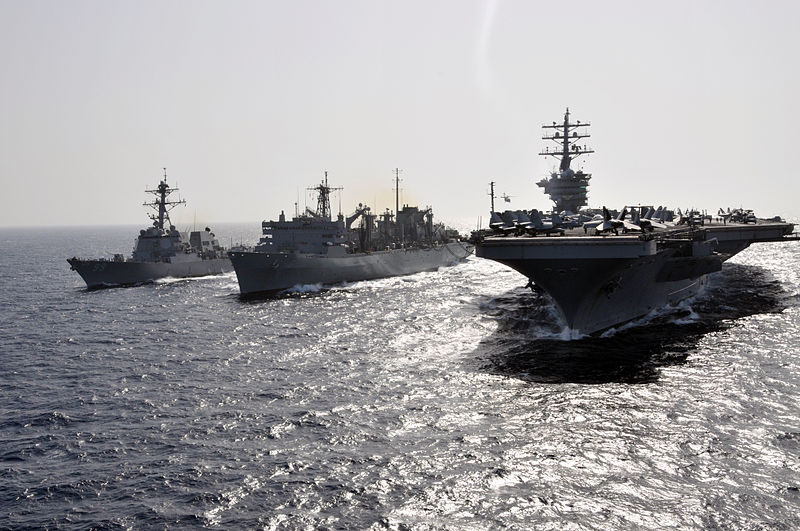
Despite these positive words, Singapore remains concerned about China’s rise. It has agreed to host the U.S. Navy’s new Littoral Combat Ships, while in his address the Premier acknowledged that ASEAN integration remains a work in progress, demanding patience and political will, in a seemingly oblique reference to Cambodia’s recent obstruction, at Beijing’s behest, of an ASEAN joint communiqué on the South China Sea.
Whatever the future holds, it is, as Mr. Lee stated, increasingly difficult for governments to look 10 or 20 years into the future, but Singapore seems reasonably well placed to take advantage of the continuing shift of economic weight from West to East.
 Asia Pacific Briefing