Why America should welcome China’s attempt to spy on RIMPAC

RIMPAC 2014


It has recently been reported that China has sent a surveillance vessel to observe the RIMPAC exercise in which Beijing is participating for the first time.

Little open source information is available about the Dongdiao-class (Type 815) intelligence collection/missile range instrumentation ship, but Jane’s has viewed material that suggests the class possesses “high-technology radio signal gathering and processing equipment”.  As part of its formal presence, the PLA-N has sent a missile destroyer, a missile frigate, a supply ship and the Peace Ark hospital ship.

While some have called on China to be banned from participating in future RIMPAC exercises, Washington should welcome Beijing’s clumsy move.  By acknowledging China’s right to conduct electronic surveillance from within Hawaii’s exclusive economic zone and by not attempting to impede it, Washington is supporting a global norm that China has sought to dispute, most notably illustrated by the 2009 incident in which Chinese vessels harassed the USNS Impeccable in international waters.

By not impeding the PLA-N’s surveillance ship, America is making it more difficult for Beijing to obstruct vessels in waters off the Chinese coast.  This will not only strengthen the U.S. position,  but will benefit regional states in Asia which have experienced harassment by Chinese vessels.

Japan and Collective Self-Defence

Japan’s cabinet has approved a reinterpretation of its constitutional restrictions on its use of armed force.  The new interpretation has cleared the way – pending parliamentary ratification – for collective self-defence, the use of force to defend not only Japan but its allies.

It’s important to note, however, that some significant caveats will remain attached to Japan’s interpretation of collective defence.  Firstly, any attack on an allied country must clearly endanger Japan’s survival or severely impinge upon Japanese citizens’ lives, liberty and pursuit of happiness.  Secondly, the use of force must be the only way to repel the attack on Japan’s ally and protect Japanese citizens.  Thirdly, any use of force must be limited to the minimum required level.

While such caveats certainly offer room for manoeuvre, this reform is not evidence of the Japanese remilitarisation that Beijing and Seoul often identify in the most routine of Japanese military decisions.

Nevertheless, the move has not been without controversy.  One man set himself alight in Tokyo in protest while others have protested more soberly.  Abroad, China has, predictably, expressed outrage while South Korea has also expressed concern.

This reform, however, is a fillip for the U.S. which has long encouraged Japan to play a greater security role in its region.  Countries such as Australia also stand to benefit from a more normal Japanese defence posture.  Canberra is interested in acquiring Japanese submarine technology, or even completed submarines.

It’s difficult to emphasise how symbolically important Tokyo’s decision is.  In the wake of the Second World War, Japan adopted the Yoshida Doctrine, named after its formidable postwar Premier, Yoshida Shigeru.  This approach, which has remained hugely influential, demands that Japan focus on economic development while maintaining the relatively lightweight Japan Self-Defence Forces (JSDF).  To ensure its security, Japan has accommodated a substantial U.S. military presence.

While some in Washington accused Tokyo of free-riding throughout the Cold War, Japan’s grand strategy was undoubtedly successful.  In the early postwar years it was feared by it neighbours, despite its impoverished circumstances.  The doctrine guided Japan through a difficult period, enriching it and nurturing its status as a solid global citizen.  Why, then, has Tokyo decided to modify its stance?

The primary reason is China.  Beijing’s impressive military modernisation, combined with its increasing willingness to assert its expansive maritime claims, has focused minds in Tokyo.  By permitting the JSDF to come to the aid of its allies, even in the absence of a direct attack on Japan, Tokyo has changed Beijing’s strategic calculus and signalled its intent to balance against China.

Tokyo’s decision also hints at its doubts about Washington’s ability to maintain its primacy in Asia.  Though the U.S. will remain the strongest power in Asia for some time, Beijing is closing the gap at an impressive rate.  China will probably never be able to establish Chinese primacy in Asia, but its ability to contest American primacy is growing.  By freeing the JSDF to come to the aid of its allies, Tokyo is supporting the U.S. primacy that has guaranteed Japanese security for decades.

Domestic politics has also played a role in this decision.  Prime Minister Shinzo Abe has driven this reinterpretation which reflects his own nationalist views.  It is easily reconciled with his desire for Japan to be a normal nation, proud of its history and able to unashamedly wield all instruments of statecraft commensurate with its economic power.

While this reinterpretation won’t change Asia’s strategic environment in the short-term, it is a significant event illustrating the danger of security dilemmas in Asia.  As Beijing has increased its military strength, inculcated anti-Japanese nationalism as a way to legitimise the Communist Party’s continued rule, and sought to expand its maritime borders in an attempt to increase its internal and external security, it has made Japan feel less secure.

This has led to Tokyo’s decision to reinterpret its constitutional restrictions on the use of force, a decision which is likely to make Beijing feel less secure and seek to increase its efforts to maximise its security.  Such a course of action will only make Japan feel even less secure, causing it to seek to increase its security, and so on.  It’s a dangerous dynamic and is likely to lead to a less stable Asia.

It’s important to note that war is not inevitable, or even particularly likely, at least in the immediate future.  The problem is that when nations begin to view their relationship in zero-sum terms, it’s difficult to step back and seek mutually beneficial compromises.  Nobody wants to have their restraint misinterpreted as weakness.

Ideally, all parties would acknowledge the concerns of others and seek to ameliorate them.  Beijing (and Seoul) should acknowledge that since 1945 Japan has been a model international citizen, instrumental in their development.  They should admit that Japan is not about to go on a rampage across Asia and has a right to provide both for its own security and the security of its allies.  Beijing should also recognise that its rapid military modernisation, opaque intentions and increasing assertiveness lead its neighbours to fear the worst about its long-term trajectory.

Tokyo, meanwhile, ought to acknowledge the impact that visits by its senior leaders to the Yasukuni Shrine have on public opinion in China and South Korea and refrain from attending.  It should also cease to equivocate on its wartime atrocities, particularly its use of Korean ‘comfort women’.

Unfortunately, as Asia tranforms from a region characterised by U.S. primacy to one in which balancing behaviour is increasingly open, recognising the legitimate grievances and rights of other parties seems to be becoming ever more difficult.
Japanese Submarines for Australia?

JS_Souryu_Class_SS_in_KOBE

A recent report has suggested that Japan may sell submarine technology or even, in what would represent a sea change in Tokyo’s defence policy, an entire fleet of vessels to Australia.  Canberra is currently considering how to replace its existing Collins class submarine and has expressed an interest in acquiring Japanese submarine technology in recent years.  If such a transfer takes places, both countries would reap some benefits.  However, it may place Canberra in an awkward position in the future should, as has been reported, Tokyo insist on some kind of formal alliance in order to seal the deal.

Firstly, from a financial perspective, a Japanese decision to sell Soryu class boats to Australia would provide a boost to its manufacturers, Mitsubishi Heavy Industries and the Kawasaki Shipbuilding Corporation.  Additional orders would also drive down the manufacturing cost, meaning that Tokyo and Canberra would have to shell out less cash to purchase future boats.

Australia would also benefit by acquiring a boat in all likelihood superior to anything that it could independently design and construct. The problems surrounding the Collins class submarine offers plentiful evidence of the challenges associated with designing and building such a complex piece of equipment.

Canberra’s attraction to the Soryu is therefore understandable.  It would obtain a proven, capable platform for substantially less than it would cost to construct an indigenously designed replacement for the Collins.  Better and cheaper?  It should be a no brainer.

From a strategic perspective, however, the decision is not so clear cut.  Reports suggest Tokyo would insist on some kind of formal alliance arrangement.  This is not unreasonable.  Both Japan and Australia are liberal democracies, share a strong economic relationship and enjoy extensive people-to-people ties.  However, though shared values may make an alliance easier to sustain, alliances are rarely founded on them.

What really matters are interests.  Australia, for example, is not straining to ally with Sweden; despite the many values both countries share, they have few common pressing interests.  In contrast, after Nixon went to China, Washington and Beijing developed a quasi-alliance, not because they shared common values, but because they had a common interest in containing the Soviet Union.

When we consider Tokyo and Canberra’s interests, the picture is a little murkier.  As Chinese power grows, Japan is casting around for all the friends it can find.  This is at the root of Shinzo Abe’s desire to strengthen Tokyo’s alliance with the U.S., loosen Japan’s constitutional restriction on the use of force, and cultivate ties with countries such as India, Vietnam, the Philippines and Australia.

This is clearly in Japan’s interests, but less clearly in Australia’s interests.  Before formally allying with Japan, Canberra should consider the possible consequences.  China and Japan are currently engaged in escalating competition in the East China Sea as they jockey for position around the Senkaku (Diaoyu to the Chinese) Islands.  While war is not imminent, it would be foolish to assume that it is impossible.  It is all too easy to envisage a scenario in which a rash decision made by a commander on the scene could lead to a clash that neither side wants but from which both may find it difficult to step back.

Should the worst happen, Japan would look to its allies for support and would expect them to honour their commitments.  If Australia was in a formal alliance with Japan, this would place Canberra in an extremely difficult decision.  Would it decide to contribute to military efforts directed against China, or would it disown its alliance with Japan?

This situation is not particularly likely, at least in the short term, but it illustrates the calculations that must be made before entering into such an arrangement with Tokyo.  Of course, Australian policymakers may decide that a decision to move closer to Japan may contribute toward deterring Beijing from upping the ante in the East China Sea.  Canberra certainly has an interest in maintaining the status quo in Asia and has no desire to see Beijing redraw maritime borders by the use, or threatened use, of force.

It is likely, however, that by moving closer to Japan, Canberra would exacerbate Beijing’s fear of containment, perhaps encouraging greater Chinese assertiveness in the future.  The Soryu would certainly boost Australia’s military capability, but any decision to acquire it must take into account the risk of getting dragged into conflicts Canberra may prefer to avoid and whether closer ties with Japan would serve Australia’s greater interest in helping to peacefully integrate China into the existing regional order.

Preferences and Vital Interests

Shen Dingli’s recent Foreign Policy article makes a common criticism against recent U.S. policy toward Syria and Crimea.

He writes that,

 “…the record of Obama’s administration, and that of his predecessor’s, is of security assurances backed up lately only by inaction.  The United States has failed to stop Bashar al-Assad in Syria. It failed to stand up to Russia’s adventurism in the formerly Georgian territories of South Ossetia and Abkhazia in 2008, or in Crimea in March of this year.  Granted, none of these places are treaty allies of the United States.  But if the United States won’t face Russia in Europe, will it really challenge China in the East and South China seas?”

This echoes arguments made by other critics of the Obama Administration.  If the U.S. doesn’t stand up to Syria and Russia, they ask, how can it hope to deter China?

Such critics fear that if Washington’s Asian allies believe it doesn’t possess the will to enforce its preferences in the Middle East and Eastern Europe, they will question America’s willingness to defend them and seek to either bandwagon with Beijing or make greater provisions for their own defence, further destabilising the Asia-Pacific region.

Such criticism, however, stems from a failure to appreciate that judicious strategy distinguishes between preferences and vital interests.

Washington, of course, would prefer a secular liberal democracy to emerge in Syria.  It would also prefer a liberal democratic Ukraine free from Moscow’s malign influence.  Neither of these outcomes, however, can be easily achieved, if at all.  More to the point, the U.S. does not have a vital interest – defined as those interests which affect one’s security and that a state will use force to defend – in the outcome of either conflict.

First, Syria.  Chastened by its misadventures in Afghanistan and Iraq, Washington is not keen to get drawn into another Middle Eastern conflict.  Getting bogged down in another sectarian conflict in the Arab world would do little to promote U.S. security and would devour resources better devoted to supporting the Washington’s pivot to Asia.

As for Crimea, Washington has offered it no security assurances and is not treaty-bound to defend it.  Using force to do so would run the risk of a clash between U.S. and Russian forces.  The defence of Crimea or Ukraine, a weak, impoverished state on the periphery of Europe, is not worth risking a clash with a nuclear-armed Russia that has a greater stake in the outcome than Washington.

For those who argue that allowing Moscow to dissect Ukraine will encourage Russian revanchism, emboldening it to seek to regain territory it lost when the Soviet Union collapsed, a little perspective is required.

Its latest actions have weakened, not strengthened Russia.  It has estranged itself from Europe and its neighbours will now be more alert to any actions that suggest Moscow is looking to redraw its borders.  Should it seek to embark on such a course, it will likely result in a balancing coalition forming against it.

Should a European balancing coalition form against it, Russia would find itself in a weak strategic position.  Europe possesses a population five times greater than Russia and enjoys a GDP eight times larger than its eastern neighbour.  The U.S. could certainly act as an offshore balancer, but it need not man the front lines.  Contemporary Russia is not the Soviet Union; Washington should expect its European allies to do the heavy-lifting.

What, then, does this mean for Asia?  I believe that Asian leaders recognise these realities and privately applaud Washington’s decision to remain relatively aloof from the conflicts in Syria and Ukraine.  After all, it isn’t in their interests for Washington to dilute its strength by taking on new security commitments in the Middle East and Europe and it certainly isn’t in their interests for the U.S. to get bogged down in conflicts in these regions.

In conclusion, it is telling that only one Asian power would identify a benefit in U.S. involvement in Syria and Ukraine.  It’s the same power that benefited from Washington’s strategic distraction in the War on Terror and the ill-judged wars it fostered.  Beijing would be only too happy to see Washington’s strategic attention focused on Syria and Russia.  By declining to get involved in conflicts of marginal importance to its security, America is better able to marshal its resources for the purpose that will shape its security in the 21st century, balancing China’s rise.


China, Music and Soft Power

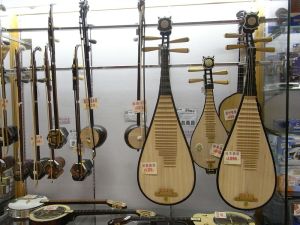
Chinese instruments

The People’s Daily has recently reported that Beijing officials intend to create a China Music Village in the city’s Pinggu District.  Some estimates suggest that the project will encompass 10 square kilometres, take 10 years to construct, and cost over US$2.3 billion.  The project will include the construction of an industrial base dedicated to the manufacture of musical instruments, studio facilities, a commercial centre, an arena, music schools and hotels.

This project is illustrative of China’s efforts to develop soft power through promoting its culture.  It is ultimately self-defeating.  The creation of soft power cannot be led from the top, constructed and exported like an industrial product.  It’s organic, an almost inadvertent side-product of a society’s values and how it conducts itself.  If people consider this attractive, it endows its society of origin with soft power.

Compare the contrived, top-down Chinese approach with, say, the U.S.  Despite Beijing’s focus on increasing China’s cultural attractiveness and soft power, it has yet to develop anything as attractive as Levi’s jeans, rock and roll or the iPod, all cultural products that have nothing to do with U.S. government policies.  It seems unlikely that a government bureaucracy could marshal such creativity.

Indeed, the more contrived China’s approach to soft power seems, the less attractive it is.  Consider, for example, the 2008 Olympics.  Intended to be China’s ‘coming out’ party, announcing its arrival as a truly powerful nation, it was dogged with stories of black jails, inadequate compensation for those whose property was destroyed in order to construct the infrastructure required for the games, and the Sanlu tainted milk cover-up.  In comparison, the news that the little girl who performed Ode to the Motherland at the opening ceremony was replaced with a cuter child who mimed her performance was comical.

In short, the CCP’s insistence on crafting an official narrative rather than embracing the multitude of stories that reflect different facets of China has obstructed the development of Chinese soft power.  The more it tries to control the narrative, the less appealing, even sinister, its efforts seem.

The success of K-Pop in general, and PSY’s Gangnam Style in particular, has prompted debate in China about whether it could ever create such a phenomenon.  Given that Chinese artists still face constraints, and the improbability of a Chinese government department ever encouraging something so ridiculous and satirical, it seems unlikely that the Chinese music industry will enjoy a similar cross-over hit in the near future.

Lunch with Singapore’s PM

Lee Hsien Loong, Prime Minister of Singapore

On Friday 12 October, I had the privilege of attending an Asia Society lunch hosted by Lee Hsien Loong, Prime Minister of Singapore, at the Shangri La Hotel in Sydney. (Sometimes I really suffer for this blog)

In his remarks, the Prime Minister hailed the warm and increasing ties between his country and Australia.  He also highlighted the positive aspects of globalisation while noting that it has impacted negatively on job security and created increasing income gaps.

Nevertheless, the Premier was generally positive about Asia’s trajectory which is inextricably linked to China’s continued re-emergence on the world stage.  While the Premier stated that he believes a successful China will be positive for both the region and the world, he did acknowledge that managing the strategic consequences of China’s rise represents a major challenge for the international system.

The existing order does not have the luxury of slowly adapting to this changing order; it is taking place swiftly and, argued Lee, it will demand restraint and wisdom from the major powers in the region, particularly Washington.

Appealing to his audience, the Prime Minister, echoing the calls of such strategists as Hugh White, called upon Australia – an enthusiastic ally of the U.S. and a key Chinese trading partner – to contribute toward a peaceful shift in Asia’s strategic environment.

Despite these positive words, Singapore remains concerned about China’s rise.  It has agreed to host the U.S. Navy’s new Littoral Combat Ships, while in his address the Premier acknowledged that ASEAN integration remains a work in progress, demanding patience and political will, in a seemingly oblique reference to Cambodia’s recent obstruction, at Beijing’s behest, of an ASEAN joint communiqué on the South China Sea.

Whatever the future holds, it is, as Mr. Lee stated, increasingly difficult for governments to look 10 or 20 years into the future, but Singapore seems reasonably well placed to take advantage of the continuing shift of economic weight from West to East.

Where in the world is Xi Jinping?

Xi Jinping has not been seen in public for over one week

China is currently buzzing with rumours about the status of Xi Jinping, China’s president-to-be.  Xi has been missing from the public eye for over one week and has missed scheduled meetings with figures such as Hillary Clinton and Singapore’s Lee Hsien Loong.

In the absence of official confirmation of his status, the China internet has lit up with conspiracy theories and conjecture.  Various explanations have been offered by netizens – some have claimed he has injured himself swimming, others have suggested that he may have suffered a heart-attack, while more imaginative contributors have pondered whether he may have been the victim of a car crash engineered by conspirators sympathetic to Bo Xilai, the ousted Chongqing Party Secretary.

While it remains unclear what fate has befallen Xi – one assumes and hopes that he is merely under the weather – the response to his unexplained disappearance reveals a number of things about modern China.

The first and most obvious is that ordinary Chinese are able to follow the politics of their country more closely than in the past.  While the authorities have tried to block web searches using Xi’s name, Chinese internet users have easily circumvented such attempts by using terms such as Crown Prince to refer to their future leader.

The CCP’s response is also revealing.  Its instinct has been to clam up and refrain from revealing the reason for Xi’s sudden disappearance.  Given that I assume he has not been purged and is instead recuperating from some kind of injury or illness, this illustrates that for all the Party seeks to portray itself as capable of modern governance, it remains, at heart, the suspicious, paranoid organisation it has been since it formed.  Its early days as an underground, secretive organisation influence its instincts today, even after 60 years of continuous rule.

The response of Chinese netizens is also illustrative of how quickly ordinary Chinese embrace rumours.  This can readily be explained by the lack of transparent governance in China.  Had a government spokesperson simply made a statement to the effect that Xi is unwell but expects to return to public life soon, the situation would not have exploded into rumour and innuendo.  Given the government response to the SARS outbreak, Sanlu milk scandal, and even reports about pollution levels, however, ordinary citizens simply assume that it is being economical with the truth.

I expect Xi to surface fairly soon, but the government response to his absence has placed further pressure on the leadership transition later this year.  Whatever has happened to Xi, it seems safe to assume that this will not be the last incident to throw the Politburo into a spin before the transition takes place.

Hong Kong rejects patriotic education before voting


Hong Kong activists have succeeded in blocking moves to establish mandatory patriotic education classes in the island’s schools.  Many Hong Kong citizens feared that their children would be exposed to what they consider Chinese Communist Party propaganda.  While the classes can still be taught, they will now be optional, with schools free to decide whether to hold them and parents free to withdraw their children should they wish.

The people of Hong Kong had legitimate concerns.  Chinese high school textbooks describe the Great Leap Forward, which led to a famine responsible for the deaths of tens of millions, as merely a time of “serious economic difficulties”, while the proposed patriotic curriculum apparently portrayed the CCP as progressive and unifying in contrast to the “divisive” and “unhealthy” democratic system favoured by most Hong Kong citizens.  What is particularly interesting is how this may impact on the Hong Kong elections held today (Sunday 9 September).

In recent times Hong Kong has seen an increase in anti-mainland sentiments.  Citizens of the semi-autonomous island have become increasingly concerned by the rising number of visitors from the mainland, the strain placed on the medical system by birth tourists seeking to procure a Hong Kong passport for their child, and the perceived lack of manners associated with the nouveau riche mainlanders.

Today’s election is fascinating because 40 of the 70 available seats in the island’s legislative council will be directly elected.  For plans for universal suffrage to be fulfilled in 2017, the support of the legislative council will be essential.  Pro-democracy candidates are expected to do well.

One wonders why the CCP felt such a curriculum was necessary.  It seems self-defeating.  Under the One Country, Two Systems model, Hong Kong enjoys considerable autonomy.  Compared with the mainland, its citizens are particularly well educated and cosmopolitan, enjoying access to greater freedom of speech and much lighter censorship than their brethren in China.  Such a ham-fisted effort to promote clumsy propaganda was always going to sit badly with Hong Kong citizens.

Such poor decision-making will also play badly in Taiwan.  Beijing has invested in greater ties with Taipei. It has suggested that should Taiwan return to the mainland, the One Country, Two Systems approach could be used to allow Taipei to preserve considerable autonomy.  Such clumsy attempts to promote the CCP’s historical narrative will only strengthen the opinion of those Taiwanese who wish to preserve the status quo.

China, the world’s largest Christian country?


I recently read this Foreign Policy article about religion in China.  I encourage you to read it as it is an interesting article about the Chinese Communist Party’s burgeoning interest in harnessing the power of religion to serve its own political ends.  While the process of rehabilitating Confucius has been underway for some time, the article focuses on Christianity.

The benefit to the CCP of bringing Christianity into the mainstream is evident: it would encourage believers to be more open about their faith, giving the Party a more accurate picture of their numbers.  If it can continue to exert control upon religion as it seeks to do by, for example, insisting upon its right to appoint Catholic bishops in the face of fierce opposition from the Vatican, it may be able to channel religion in a direction which serves its desired ends.

Having recently spent some time reading Taiwanese and South Korean history, however, I have been struck by the key role that Christians played in these states’ respective democratic transitions.  Might not the same scenario develop in China?  Will believers be content to have the limits of their religious conscience circumscribed or will a kind of Christianity with Chinese characteristics continue to evolve?  Perhaps the treatment of Falun Gong members will dissuade Christians from organising and pushing against limits imposed upon them by the authorities.

As with so many aspects of modern China, no one knows how religiosity will evolve in the Middle Kingdom.  While communist policy makers will doubtless place an emphasis on rendering unto the CCP the things which are the CCP’s, they will also be aware of the later impact of Christianity upon the Roman Empire.  Some estimates suggest that up to 10% of Chinese are Christians.  Might Christianity one day be adopted as a state religion?  This may seem fanciful, but Romans may have thought the same of the Empire before Constantine and Theodosius.

What its veto says about China


China’s veto of a UN resolution condemning Syria’s crackdown on anti-government protestors has been widely criticised in the Western press, echoing the frank appraisals of such politicians as Hillary Clinton and the French Defence Minister, Gerard Longuet.

What the veto says about China, however, has received considerably less coverage.  Though it typically chooses to abstain when it holds reservations or disagrees with the subject of a vote, this time Beijing elected to actively sink the proposal to condemn the Assad regime’s behaviour.

China often declares its opposition to any attempt to impinge upon the sovereignty of other countries, fearing that one day the West may shift its attention to Chinese policies in Tibet and Xinjiang.  In the wake of the ousting of Libya’s Gaddafi, it was also concerned about the consequences of allowing a resolution condemning another Arab leader to pass. Beijing abstained when faced with a resolution to establish a no fly zone over Libya and then looked on appalled as NATO, from China’s perspective, not only overstepped its mandate, but hurdled it.

The decision to veto the Syrian resolution, however, seems to have been motivated by more than such sentiments.  Recent years have seen China adopt a more assertive approach to territorial claims in the South China Sea, offer blunt criticism of the West’s economic profligacy and pursue attempts to increase its own soft power.

Such behaviour is indicative of China’s growing confidence.  Though Beijing seems to have concluded that it overplayed its hand during the height of the Global Financial Crisis and its recent behaviour has been comparatively restrained, it is nevertheless apparent that China is much less willing to keep its head down and defer to the West.  It seems likely that as its power grows relative to that of the US, this trend will continue to develop.  This veto was a rare flexing of China’s diplomatic muscle in the UN Security Council; it is also likely to become more common.